Source Rough Terrain Skid Steer Tire for Construction, Mining, and Landscaping
Find and compare 30 rough terrain skid steer tire options featuring bias-belted and radial designs. Evaluate specifications like 10-16.5 and 12-16.5 sizes, ECE and DOT certifications, and all-season performance for heavy-duty industrial machinery applications.
Key considerations
Products List




Comprehensive Sourcing Guide
Rough Terrain Skid Steer Tire Sourcing Guide
Procuring tires for rough terrain skid steer loaders requires a precise understanding of the specific operational demands placed on the equipment, as these machines frequently operate in high-abrasion environments like construction sites, logging operations, and agricultural fields. The supply chain for these specialized components is dominated by manufacturers in China, where production capabilities span from bias-belted designs to radial configurations, each offering distinct trade-offs in durability and ride comfort. Buyers must navigate a market where product attributes vary significantly, ranging from solid tires designed for extreme puncture resistance to tubeless pneumatic options that provide better shock absorption for sensitive hydraulic systems.
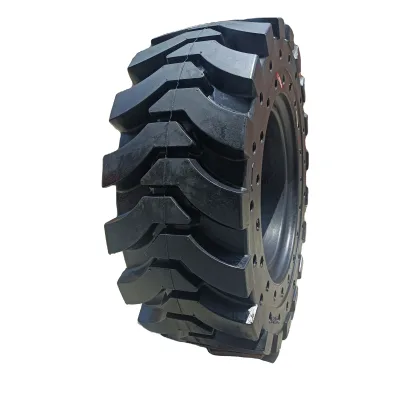
The sourcing process is further complicated by the diversity of sizing standards and certification requirements that differ by target market, particularly between North American and European specifications. While some listings indicate a broad range of models including 10-16.5 and 12-16.5, others focus on specific industrial applications with sizes like 20.5/70-16 or 385/65R22.5, necessitating a rigorous verification of fitment against the skid steer's rim specifications. Successful procurement hinges on matching the tire's tread pattern, such as the observed cross-country designs, to the specific terrain conditions, ensuring that the selected product can withstand the unique stresses of skid steering without premature failure.
Product Scope and Observed Listing Signals
The current market for rough terrain skid steer tires presents a wide spectrum of product types, including bias-belted, radial, and solid tire variants, each catering to different operational priorities. Buyers will encounter listings that specify the tire design as either a bias-belted or radial type, with some products explicitly marketed as solid tires to eliminate the risk of flats in debris-heavy environments. The observed product range includes models with cross-country tread patterns, which are particularly relevant for skid steers operating on mixed surfaces, and these tires are often categorized as all-season options to ensure year-round usability in varying weather conditions.
Commercial signals in the listings reveal significant variability in packaging and delivery terms, which can impact the total landed cost and logistics planning. While some suppliers offer no packing or nude packing to reduce material costs, others provide export packing to ensure the tires arrive in pristine condition, a critical factor for buyers concerned about cosmetic damage during transit. The observed minimum order quantities (MOQ) range from single units to 5,000 pieces, allowing flexibility for both small fleet replacements and large-scale procurement projects, while lead times typically fall between 20 to 45 days depending on the specific model and order volume.
Technical Specifications to Verify
Verifying the physical dimensions and construction details is the first critical step in ensuring compatibility with the skid steer loader's existing wheel assembly. Buyers must confirm the exact tire size, such as 10-16.5, 12-16.5, or 14-17.5, and cross-reference these with the fitted rim specifications, which are often listed as 8.25X16.5 or 9.75X16.5 for these applications. It is essential to distinguish between tubeless and tube-type constructions, as the observed data indicates a prevalence of tubeless (vacuum) tires, but some specific models may still require inner tubes, and selecting the wrong type can lead to installation failures or safety hazards.
Beyond dimensions, the structural integrity and material composition of the tire must be scrutinized to match the intensity of the work environment. The cord material is frequently identified as nylon, which provides a balance of strength and flexibility, while the tire hierarchy, such as 14PR, indicates the ply rating and load-carrying capacity essential for heavy-duty skid steer operations. Buyers should also verify the weight specifications, which can vary significantly, and confirm whether the product is a full-size spare tire or a primary tire, as this distinction affects inventory management and replacement strategies for the fleet.
Compliance and Safety Documentation
Navigating the regulatory landscape for skid steer tires requires careful attention to the certifications held by the manufacturer, as these documents validate the product's safety and performance standards for specific regions. The observed listings frequently cite a combination of certifications including ECE, DOT, CCC, and ISO, which are critical for importing tires into North America, Europe, and China respectively. Buyers must ensure that the specific tire model they intend to purchase carries the relevant certification for their target market, as a tire certified only for domestic Chinese use may not be legally compliant for operation in the United States or the European Union.
In addition to product-specific certifications, the manufacturing facility's quality management systems play a vital role in ensuring consistent product quality and safety. Many suppliers provide evidence of ISO9001, ISO4001, and OHSAS18001 certifications, which demonstrate a commitment to standardized production processes, environmental management, and occupational health and safety. These standards are not merely administrative requirements but serve as indicators of a supplier's ability to maintain rigorous quality control throughout the production cycle, reducing the risk of defects that could lead to tire failure during operation.
Cost Drivers and Commercial Terms
The pricing structure for rough terrain skid steer tires is influenced by a complex interplay of factors, including the tire design, material costs, and the specific certification requirements for the destination market. The observed price range spans from approximately $18.50 to $839 per unit, reflecting the vast difference between smaller, lighter-duty tires and larger, heavy-duty radial or solid tires designed for high-load applications. Buyers should be aware that the lower end of the price spectrum often corresponds to basic bias-belted or solid tires, while the higher prices are associated with advanced radial designs, specialized tread patterns, and comprehensive certification packages.
Commercial terms such as minimum order quantities (MOQ) and lead times are significant variables that can affect the overall procurement budget and project timeline. While some suppliers offer an MOQ of just one unit, facilitating small-scale testing or emergency replacements, others require orders of up to 5,000 units to unlock competitive pricing or expedited production slots. Lead times typically range from 25 to 45 days, and buyers must factor in these durations when planning fleet maintenance schedules, as delays in delivery can result in equipment downtime and lost productivity on the job site.
Supplier Qualification and Quality Control
Establishing a reliable supply chain for skid steer tires involves a thorough vetting process that goes beyond reviewing product listings to assess the supplier's manufacturing capabilities and quality assurance protocols. Buyers should prioritize suppliers who welcome factory visits, as this transparency allows for a direct assessment of production lines, raw material storage, and the implementation of quality control measures. The presence of certifications like ISO9001 and specific product standards such as DOT and CCC provides a baseline of credibility, but on-site verification ensures that these standards are actively maintained rather than merely displayed on paper.
Quality control in the tire manufacturing process is particularly critical for rough terrain applications, where failure can lead to catastrophic equipment damage or operator injury. Buyers must verify that the supplier conducts rigorous testing on key attributes such as tread wear, load capacity, and structural integrity before shipment. The observation of specific product standards like "As attached" or specific model numbers indicates that the supplier adheres to defined technical specifications, but buyers should request detailed test reports or third-party validation to confirm that the tires meet the performance claims made in the product descriptions.
Long-Term Procurement Checks
Sustaining a successful procurement relationship for rough terrain skid steer tires requires a commitment to ongoing performance monitoring and supplier evaluation over the long term. Buyers should establish a system for tracking tire performance metrics, such as tread life, puncture resistance, and overall durability, to ensure that the purchased products continue to meet operational expectations. This data-driven approach allows for the identification of any recurring quality issues and provides leverage for negotiating better terms or switching suppliers if performance standards are not consistently met.
Furthermore, maintaining a strategic partnership with suppliers who offer customization services can provide a competitive advantage in adapting to changing operational needs. The availability of customization options, as noted in the product listings, allows buyers to tailor tire specifications to unique site conditions or specific machine modifications. By fostering a collaborative relationship with suppliers who are responsive to feedback and capable of adapting their production to meet specific requirements, buyers can ensure a steady supply of high-quality tires that support the long-term efficiency and safety of their skid steer fleet.
FAQs
What certifications are available for these tires?
These tires hold ECE, CCC, ISO, and DOT certifications. Some listings also include CE, FCC, and RoHS marks. This ensures compliance with international safety and quality standards for various global markets and regulatory requirements.
Can I customize the tire specifications?
Yes, customization is available for these tires. Buyers can request specific models like 10-16.5 or 12-16.5. The supplier supports tailored solutions to meet unique machinery requirements and operational needs for rough terrain applications.
What is the typical lead time for delivery?
The standard lead time is approximately 25 days. Some suppliers indicate delivery within 45 days. Actual times may vary based on order volume and specific production schedules, so confirm timelines directly with the manufacturer before ordering.
Which tire designs are offered for skid steers?
Options include Cross-Country Tread Pattern, Bias Belted Tyre, and Radial Tyre designs. These are available in tubeless and solid types. The variety supports different traction needs and terrain conditions for industrial and agricultural machinery.
What is the minimum order quantity for these tires?
The observed MOQ ranges from 1 to 5000 units. This flexibility allows buyers to order small samples or large bulk quantities. Check specific supplier listings for exact MOQ requirements based on the selected tire model and size.
Are these tires suitable for all seasons?
Yes, they are classified as All Season Tires. This makes them versatile for various weather conditions. The design supports consistent performance in different environments, reducing the need for seasonal tire changes for many rough terrain applications.